Introduction: The Grief That Will Not Be Scheduled
It is two in the morning, three years after the funeral, and you are crying again. And somewhere beneath the grief is a second, more corrosive feeling: the suspicion that something is wrong with you for still grieving at all. Perhaps a well-meaning friend has said it is time to move on. Perhaps you have read that prolonged grief is now a diagnosable disorder. Perhaps the voice is simply your own, trained by a culture that treats sorrow as a problem with an expiration date. And yet, a few miles away, a community gathers every single year, on purpose, to weep together for a man who was killed fourteen centuries ago, and they do not call it sickness. They call it worship.
In the first post of this series, I argued that the ethic of muwāsāt (consoling accompaniment—the sharing of another’s burden) asks us to stay present with the suffering rather than rushing to fix them. This post takes up what becomes possible once someone has stayed: the grief itself, fully felt and openly expressed. My argument here is that the Shīʿah practice of ʿazāʾ, the communal, embodied, recurring mourning for Imām Ḥusayn (ʿa) and the martyrs of Karbalāʾ, embodies a model of adaptive grief that contemporary clinical culture has largely lost the capacity to recognize. Where the dominant Western frame increasingly treats intense and enduring grief as a disorder to be resolved on a clinical timeline, the tradition treats sorrow as a sacred practice to be structured, honored, and carried, and it does so in a way that recent grief research is, in its better moments, beginning to vindicate.
I should be clear at the outset about what this post is and is not arguing. I am not arguing that grief never becomes clinically impairing, nor that the genuine suffering of those who are trapped by their loss should be dismissed. Mental illness is real, and there are forms of grief that disable a person and warrant treatment. What I am arguing is that the clinical line should be drawn at impairment, not at intensity or duration, and that the Shīʿah tradition offers a living demonstration of how a community can hold profound, recurring, openly expressed grief without that grief becoming pathology. As such, ʿazāʾ is not a problem for psychology to explain away; it is, I posit, a sophisticated grief technology from which psychology has something to learn.
A note on what this post does not repeat. Readers of our earlier series, The Psychology of Sacred Grief, will recall that it addressed the grief surrounding the destruction of Jannatul Baqīʿ: a grief of absence, mourned across distance through ziyārah min baʿīd (visitation from afar) and illuminated by continuing-bonds theory. The present post turns in a different direction. Its subject is not absence but presence and practice: the living, embodied, communal act of ʿazāʾ itself, and the question of why a culture has come to treat loud, recurring, collective grief as something to be cured. The two posts are companions, and I will point the interested reader to the earlier series, but the angle and the literature here are deliberately distinct.
How this post is structured: I begin with the clinical reality of how grief has been increasingly medicalized, and the debate this has provoked (Module 1). I then turn to the theology of ʿazāʾ, the tradition’s framing of mourning as worship (Module 2). Module 3 examines the mechanism by which ritual mourning heals, drawing on recent experimental research. Module 4 brings the clinical and the theological together. I close with recommendations, a set of frequently asked questions, and a reflection on what it means to give grief a room to live in.
Module 1: When Grief Became a Disorder
The Medicalization of Sorrow
For most of the twentieth century, clinical grief theory operated on a model of resolution. The bereaved were expected to do the “grief work,” sever their bond with the deceased, and return, within a reasonable interval, to baseline functioning. Grief that persisted past that interval was suspect. This cultural assumption, that healthy grief is grief that ends, has now been formalized. With the publication of the DSM-5-TR in 2022, Prolonged Grief Disorder (PGD) entered the diagnostic manual, defining a syndrome of intense, persistent grief that continues beyond an expected timeframe (twelve months for adults) and is accompanied by significant distress or functional impairment.
The inclusion was, and remains, contested. Hui (2025), mapping the debate, charts the positions for and against the medicalization of grief, a controversy that has intensified rather than settled with PGD’s formal arrival. Critics worry, with reason, that a diagnostic category risks pathologizing what is in fact a normal, if painful, human process, and that it imports a culturally specific assumption (that grief should be time-limited and privatized) into a universal diagnostic standard. Stein, Palk, and Kendler (2021), in their examination of what constitutes a mental disorder, situate exactly this kind of boundary problem at the heart of psychiatric nosology: the question of where ordinary human suffering ends and disorder begins is not a purely empirical one, but is shaped by values and culture.
The Cultural Narrowness of the Resolution Model
I want to name the cultural assumption directly, because it is so deeply embedded that it often passes for clinical fact. The expectation that grief should attenuate within a year, that it should be experienced privately, that its public and recurring expression is a sign of pathology, is not a neutral scientific finding. It is the product of a particular modern, secular, and largely Western cultural configuration. Many of the world’s traditions have held, and continue to hold, that grief is properly communal, properly recurring, and properly long. The resolution model mistakes its own cultural preferences for human universals.
This is where the encounter with the Shīʿah tradition becomes clinically illuminating. By the criteria of the resolution model, the entire practice of ʿazāʾ would look like a community-wide case of prolonged grief: an intense, recurring, openly expressed mourning that has continued not for twelve months but for fourteen centuries. And yet, the community that practices it is not, by that fact, disordered. This begs the question of whether the resolution model has mistaken a culturally specific norm for a clinical truth, and whether a tradition that grieves loudly, communally, and forever might be holding territory that the diagnostic map has simply failed to chart. Interestingly, the most recent grief research is beginning to suspect as much.
Module 2: ʿAzāʾ — Mourning as Worship
A Sorrow That Is Commanded, Not Merely Permitted
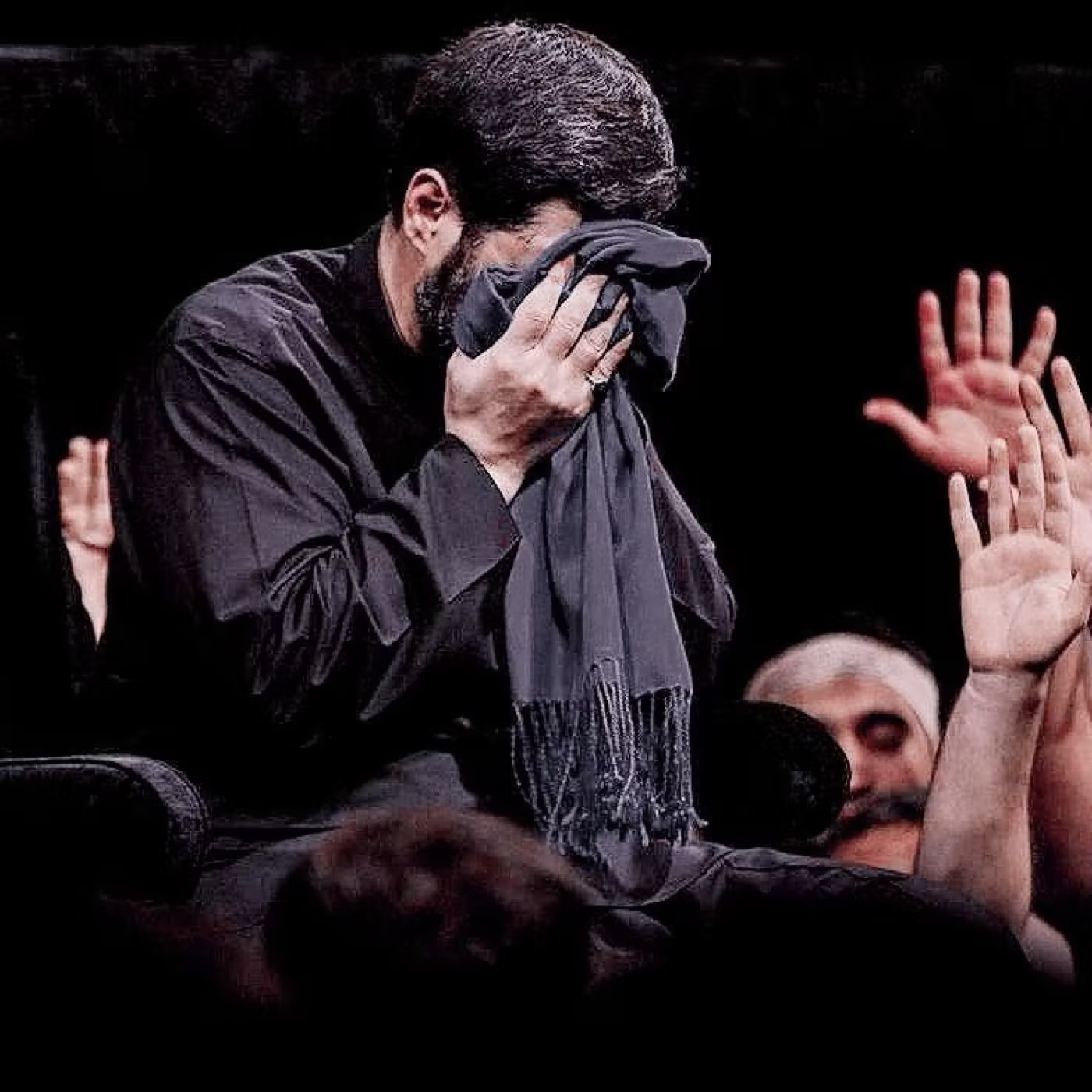
The Shīʿah tradition does not merely tolerate grief for Ḥusayn (ʿa); it actively cultivates it and attaches to it the language of reward and worship. This is a crucial distinction. In the resolution model, the goal is to move through grief and out the other side. In the tradition of ʿazāʾ, the weeping itself is the act of devotion, recurring by design, year after year, without any expectation that it should one day cease.
The tradition first establishes that grief, including tears, is not a failure of faith but an expression of mercy. The reports describe the Noble Prophet (ṣ) himself weeping at the death of his infant son Ibrāhīm and, when questioned, distinguishing sanctioned grief from forbidden despair:
“This is not [forbidden] wailing; rather, it is mercy. He who does not show mercy will not be shown mercy.”
(aṭ-Ṭūsī, Al-Amālī, on the Noble Prophet (ṣ) at the passing of his son Ibrāhīm; cited in ar-Rayshahrī, Mīzān al-Ḥikmah; cf. Ṣaḥīḥ al-Bukhārī, no. 1303)
The principle established here is foundational: tears are raḥmah, compassion, the overflow of a heart that loves. The tradition then extends this principle to the mourning of Ḥusayn (ʿa), where weeping is framed not only as permitted mercy but as a meritorious act with eschatological reward. Imām Zaynul ʿĀbidīn (ʿa), himself a survivor of Karbalāʾ and remembered as al-bakkāʾ, the one who wept, is reported to have said:
“Any believer whose eyes shed tears for the killing of Ḥusayn (ʿa), such that they roll down his cheeks, Allah shall settle him in the elevated chambers of Paradise…”
(Shaykh aṣ-Ṣadūq, Thawāb al-Aʿmāl, Vol. 1, Section 145, Ḥadīth #293; cited in ar-Rayshahrī, Mīzān al-Ḥikmah)
The image is arresting. The tears do not merely express grief; they build something. They construct chambers in the hereafter. Grief, in this framing, is generative rather than merely something to be survived.
A note on classification, since this series is held to a standard of citation precision: narrations of this kind belong to the genre of faḍāʾil and thawāb, the literature of merits and rewards, and several are graded variably by the rijāl scholars (specialists in ʿilm ar-rijāl, the science of evaluating ḥadīth transmitters). I present them as such. Their force here is not as standalone legal proofs but as a corroborated current running consistently through the tradition’s mourning literature, reinforced by the practice of the Imāms themselves and by the broader, well-attested principle that tears for the beloved are mercy. The theological reviewer of this series will verify each chain and its Arabic; my argument rests on the consistency of the current, not on any single narration in isolation.
The Annual Rhythm Modeled by the Imāms (ʿa)
What makes ʿazāʾ a model of structured grief rather than unbounded sorrow is its rhythm. The tradition does not ask the believer to grieve constantly and formlessly. It establishes a calendar, a recurring season of intensified mourning, modeled by the Imāms themselves. Imām ar-Riḍā (ʿa) is reported to have described his father, Imām al-Kāẓim (ʿa):
“When the month of Muḥarram entered, my father would not be seen laughing, and melancholy would prevail over him until ten days had passed. When the tenth day came, it was the day of his grief, his sorrow, and his weeping…”
(Shaykh aṣ-Ṣadūq, Al-Amālī, Vol. 1, Section 27, Ḥadīth #219; also al-Ḥurr al-ʿĀmilī, Wasāʾil ash-Shīʿah; cited in ar-Rayshahrī, Mīzān al-Ḥikmah)
Here is the structure that distinguishes adaptive grief from being engulfed by it. The grief has a season, a container, a beginning, and a shape. The Imām (ʿa) did not grieve without form for the whole year; he entered a defined period of mourning and moved through its intensity within a held structure. This is, in clinical terms, a model of grief that oscillates between engagement with the loss and engagement with ordinary life, embedded in a communal calendar that gives the sorrow both permission and boundaries.
Lament as Devotional Practice
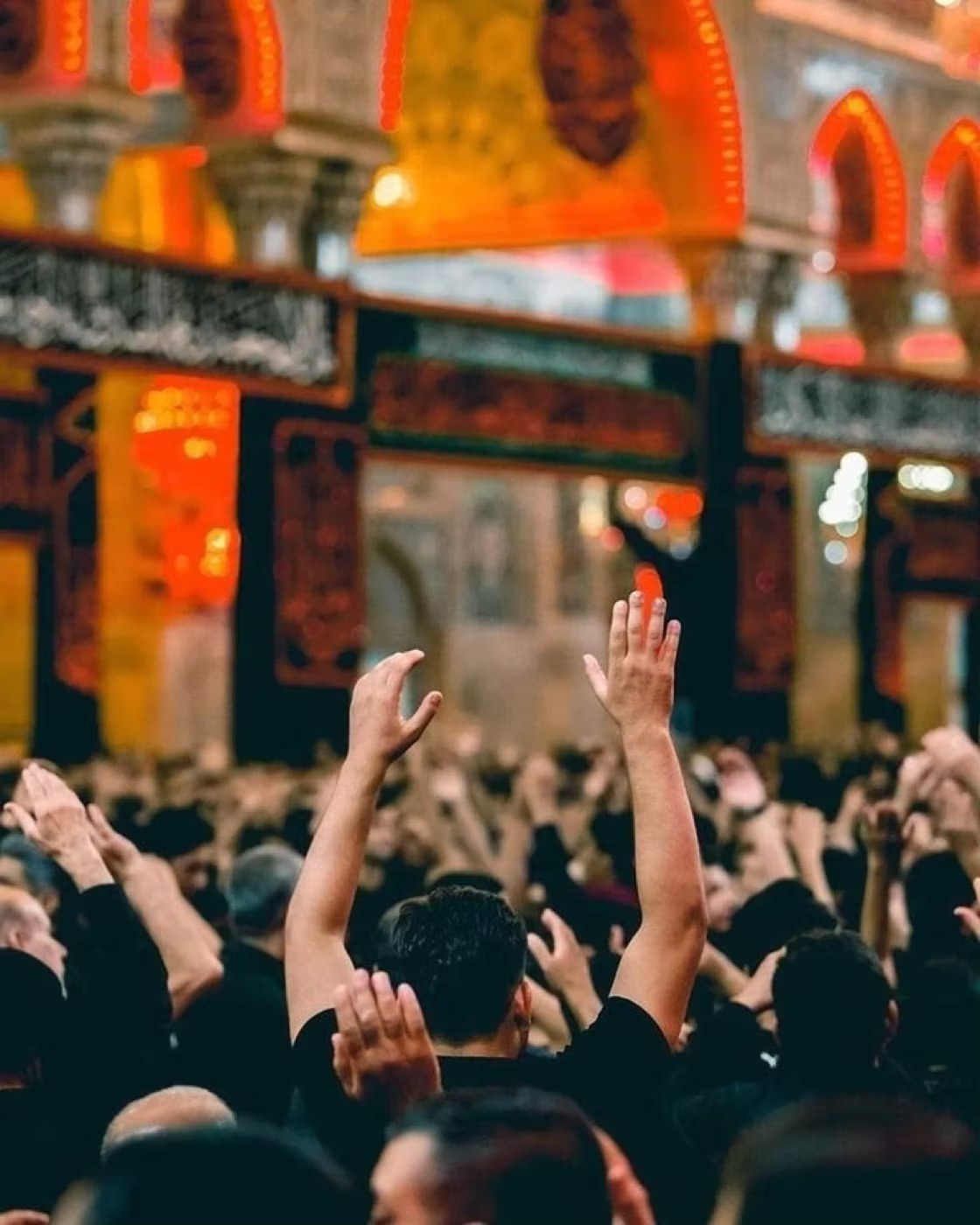
Finally, the tradition sanctifies the expression of grief, including its most communal and artistic forms. The recitation of elegy, the marthiyah and the nawḥah that form the heart of the majlis, is itself framed as an act of reward. Imām aṣ-Ṣādiq (ʿa) is reported to have said that whoever recites poetry concerning Ḥusayn (ʿa) and weeps, and causes others to weep, is rewarded with Paradise (Shaykh aṣ-Ṣadūq, Thawāb al-Aʿmāl). This is a remarkable inversion of the resolution model’s instinct to privatize and quiet grief. Here, grief is meant to be voiced, shared, made beautiful through poetry, and spread from heart to heart in a gathering. The majlis is, among many other things, a communal grief ritual in which the open expression of sorrow is the point.
Module 3: Why Ritual Mourning Heals
The Restoration of Control
If the tradition prescribes ritual mourning, the natural clinical question is whether such ritual actually helps, and recent experimental research provides a striking answer. Norton and Gino (2014), in a series of controlled experiments, demonstrated that performing mourning rituals reduces grief, and they identified the mechanism: rituals restore a sense of control that loss had stripped away. Bereavement, by its nature, confronts a person with the limits of their agency; the death cannot be undone, the loss cannot be reversed. A ritual, by contrast, is something the bereaved can do, a structured action they can perform, and the performance of it restores a measure of the agency that grief had taken. This is, I would argue, precisely what ʿazāʾ offers: a structured set of actions (attending the majlis, reciting the elegy, performing the laṭm, participating in the annual rhythm) that the grieving community can do in the face of a loss that cannot be undone.
Ritual, Continuing Bonds, and Communal Holding
The benefit of mourning ritual extends beyond the restoration of control. Le, Zhou, Ogrodniczuk, and Killikelly (2025), in a mixed-methods review of mourning rituals across East and Southeast Asian contexts, found that post-loss rituals support long-term adjustment through several pathways: they mobilize family and community support, they provide a sanctioned channel for the expression of devotion, and they sustain continuing bonds with the deceased. Crucially, the authors conclude that clinicians should integrate, rather than pathologize, these culturally embedded practices. The parallel to ʿazāʾ is direct. The majlis mobilizes the entire community as a holding environment, channels devotion into structured expression, and sustains the bond between the believer and the Ahlul Bayt (ʿa) across the centuries.
I find it worth noting, as a scholar reading across these literatures, that the practices the research identifies as adaptive (communal, expressive, devotion-channeling, bond-sustaining) are precisely the features of ʿazāʾ that the resolution model would be most inclined to flag as pathological. The very loudness, communality, and recurrence that look like prolonged grief from inside the resolution model are, on the emerging evidence, the active ingredients of adaptive grieving. The convergence is not total, and I do not wish to overstate it, but the direction is unmistakable.
The Tradition’s Own Diagnostic Line
It would be a mistake to read the tradition as endorsing limitless grief without discernment. The same sources that command mourning also distinguish raḥmah (the mercy of sanctioned tears) from jazaʿ (جَزَع, anguished impatience—not jazāʾ, reward) in its forbidden, despairing forms, the grief that collapses into a rejection of divine decree. The distinction the Prophet Muḥammad (ṣ) himself drew, “this is not wailing; rather, it is mercy,” is itself a line drawn between adaptive and maladaptive sorrow. The tradition, in other words, has its own diagnostic boundary, and it is worth observing that the boundary it draws falls close to where the better clinical thinking now falls: not at the intensity or duration of grief, but at whether the grief remains an expression of love and faith or curdles into despair and dysfunction. As such, the tradition is not naive about the dangers of grief; it simply locates the danger differently, and, I would argue, more wisely, than the resolution model does.
Module 4: Bridging the Consulting Room and the Majlis
The Convergence Mapped
Having traced the medicalization of grief and the debate it has provoked (Module 1), the theology of ʿazāʾ as worship (Module 2), and the research on why ritual mourning heals (Module 3), I now bring the threads together. The following table maps the correspondence:
|
Clinical Concept |
Islamic Practice |
Integration |
|
Rituals restore control lost to grief (Norton & Gino, 2014) |
Laṭm, marthiyah, attending the majlis |
Structured mourning gives the grieving something to do before an irreversible loss |
|
Mourning rituals aid adjustment via communal support and devotion (Le et al., 2025) |
The majlis as communal holding environment |
The community, not the isolated individual, becomes the unit of grieving |
|
The clinical line is impairment, not intensity or duration |
Raḥmah (sanctioned tears) distinguished from despairing jazaʿ |
The tradition draws its diagnostic boundary at despair, not at sorrow |
|
Grief over-medicalized by the resolution model (Hui, 2025; Stein et al., 2021) |
Grief sanctified as recurring worship for fourteen centuries |
A living counter-example to the assumption that healthy grief must end |
It is fair to conclude that the Shīʿah tradition has practiced, for over a millennium, a model of communal and recurring grief that the most recent clinical research is only now beginning to recognize as adaptive. Science, in this case, corroborates what the tradition has long held: that grief honored in community, given ritual form and recurring permission, is not a wound that festers but a love that endures.
What Clinicians Need to Hear
For clinicians, the implication is a discipline of humility. A clinician who encounters a Shīʿah client weeping intensely each Muḥarram, attending majālis years and decades into a personal loss, or describing a grief for Ḥusayn (ʿa) that has no foreseeable end, must resist the reflex to reach for the PGD criteria. These are not, in themselves, symptoms. They are, by the emerging clinical literature’s own findings, adaptive grief practices embedded in a tradition that predates, and in many respects, exceeds the diagnostic framework. The responsible clinician asks not “how long has this grief lasted?” but “is this grief impairing this person’s life, or is it sustaining them?” The two questions yield very different answers, and only the second is clinically sound.
The corollary applies to clients of any background. The clinician who absorbs the lesson of ʿazāʾ may find resources to offer the Western client who has been shamed for grieving “too long”: the prescription of ritual structure, the encouragement of communal and expressive mourning, the reframing of an enduring bond as adaptive rather than stuck. The tradition’s grief technology is, in this sense, exportable in its principles even where its specific practices are not shared.
Therapeutic Recommendations: Giving Grief a Room
For Individuals
- Build a container for your grief. If your sorrow feels formless and unending, give it a structure: a dedicated time, a ritual action, a recurring observance. The annual rhythm modeled by the Imāms (ʿa) (entering a season of intensified mourning within a held boundary) is a template you can adapt to your own losses. A container does not diminish grief; it makes it bearable to carry.
- Grieve in community, not in isolation. The majlis demonstrates that grief is lighter when it is shared and witnessed. Seek out the communal forms of mourning your tradition offers, and resist the cultural pressure to grieve privately and quietly. The presence of others who weep with you is, on the evidence, one of the active ingredients of healing.
- Reject the timeline of shame. If a voice (internal or external) tells you that you should be “over it” by now, recognize that voice as the product of a particular and narrow cultural assumption, not a clinical truth. The relevant question is not whether your grief has lasted too long, but whether it is impairing your life or whether it remains an expression of your love.
- Let expression be devotional. Tears, recitation, and lament are, in the tradition, acts of mercy and even of worship. Permit yourself the full and open expression of sorrow rather than its suppression. The poetry of the marthiyah exists precisely because grief, voiced and made beautiful, heals in a way that grief swallowed does not.
For Clinicians
- Draw the line at impairment, not intensity or duration. When assessing grief, anchor your clinical judgment in functional impairment and the presence of despair, not in how long or how loudly a person grieves. Intense, recurring, expressive grief is not, by itself, a disorder.
- Distinguish cultural mourning practice from pathology. With Shīʿah Muslim clients, learn what ʿazāʾ, the majālis, and the Muḥarram cycle mean in their lives, and understand these as adaptive grief practices rather than symptoms. To pathologize them is both a clinical and a cultural error.
- Consider prescribing rituals. For clients of any background who lack a container for their grief, the evidence supports the therapeutic use of ritual (Norton & Gino, 2014). Help the client construct a structured, repeatable mourning practice that restores a sense of agency before an irreversible loss.
- Mobilize community as a holding environment. Where a client is grieving in isolation, explore the communal resources available to them, religious, cultural, or otherwise. The research consistently identifies communal support as a central pathway through which mourning ritual aids adjustment (Le et al., 2025).
- Watch for genuine impairment without over-reaching. None of this is license to ignore grief that has become disabling. Where grief curdles into despair, immobilizing depression, or risk of self-harm, treatment is warranted. The skill lies in distinguishing the grief that sustains from the grief that disables, and in honoring the first while treating the second.
Frequently Asked Questions
Is it unhealthy to grieve someone for years, or even decades?
Not in itself. The clinical concern in grief is functional impairment, not duration. A grief that endures but remains an expression of love, and does not disable a person’s life, is not a disorder. The Shīʿah tradition’s centuries-long mourning for Ḥusayn (ʿa) is a vivid demonstration that enduring grief can be sustaining rather than pathological.
Does crying every Muḥarram mean I have not “processed” my grief?
No. Recurring, seasonal mourning is a feature of adaptive grief, not a sign of its failure. Recent research shows that ritualized, communal mourning aids long-term adjustment (Le et al., 2025) and restores a sense of control lost to grief (Norton & Gino, 2014). The annual rhythm of ʿazāʾ is a model of structured, healthy mourning, not evidence of unresolved pain.
When does grief actually become a clinical problem that needs treatment?
When it persistently impairs a person’s ability to function, deepens into immobilizing despair or depression, or brings thoughts of self-harm. The line is impairment and despair, not intensity or duration. If grief is interfering with daily life over an extended period, a consultation with a qualified mental health professional is wise.
Is the practice of weeping for Ḥusayn (ʿa) really compatible with psychological health?
The evidence suggests it is more than compatible; it aligns with the practices that grief research identifies as adaptive: communal, expressive, ritually structured, and bond-sustaining. The tradition also draws its own line between sanctioned mourning and despairing grief, which corresponds closely to the clinical distinction between adaptive and maladaptive sorrow.
How is this different from your earlier writing on sacred grief?
Our earlier series, The Psychology of Sacred Grief, addressed the grief of absence, mourning the destroyed shrines of Jannatul Baqīʿ across distance. This post addresses the grief of practice, the living and communal act of ʿazāʾ itself, and the question of why a culture pathologizes loud, recurring, collective mourning. The two are companion pieces approaching grief from different angles.
Conclusion: A Room for Sorrow to Live
The argument of this post can be stated simply. Contemporary clinical culture, formalized in the diagnosis of Prolonged Grief Disorder, has increasingly treated intense and enduring grief as a problem to be resolved on a timeline, a stance that recent research is rightly contesting as culturally narrow. The Shīʿah tradition offers a living alternative: in the practice of ʿazāʾ, grief is not a disorder to be cured but a worship to be performed, communal, expressive, ritually structured, and recurring by design. And the most current grief science, on the restoration of control through ritual and the adaptive power of communal mourning, is beginning to vindicate what the tradition has practiced for fourteen centuries.
For the person crying at two in the morning, ashamed of a grief that will not end, this is a reframe with both clinical and theological integrity. Your grief was, perhaps, never the problem. The problem may be that no one ever gave it a room to live in. The tradition builds such rooms. It calls them majālis, and it says that the tears shed in them do not merely express your sorrow; they build something that endures.
In the next post of this series, I turn from the grief itself to the figure the grieving turn toward, examining how connection with the Ahlul Bayt (ʿa) functions as a secure attachment and a coherent system of meaning. If ʿazāʾ is the grief that is honored, the Ahlul Bayt (ʿa) are the beloved whom that grief keeps reaching toward.
At Kisa Therapy Clinic, we believe that the best grief work honors both the science of psychology and the wisdom of the tradition. If you carry a grief that the world has told you to be done with, whether for a person you have lost or for the beloved of Karbalāʾ, we are here to hold that with you.
May Allah (swt) make our tears a mercy and not a despair, settle our beloved in the elevated chambers, and gather us among those who weep with understanding. Wa mā tawfīqī illā billāh.
Ali Raza Hasan Ali, MSW, RSW
Clinical Director, Kisa Therapy Clinic
References
Hui, J. C. Y. (2025). Mapping contested terrain: A positional analysis of the medicalization of grief [Master’s thesis, University of Calgary]. https://ucalgary.scholaris.ca/items/f8abbf48-1fcf-4b67-a5bf-ee9d06df7ce5
Le, H., Zhou, N., Ogrodniczuk, J. S., & Killikelly, C. (2025). Mourning rituals impact grief outcomes in East and Southeast Asia: A mixed-methods review. Death Studies. Advance online publication. https://doi.org/10.1080/07481187.2025.2561079
Norton, M. I., & Gino, F. (2014). Rituals alleviate grieving for loved ones, lovers, and lotteries. Journal of Experimental Psychology: General, 143(1), 266–272. https://doi.org/10.1037/a0031772
Stein, D. J., Palk, A. C., & Kendler, K. S. (2021). What is a mental disorder? An exemplar-focused approach. Psychological Medicine, 51(6), 894–901. https://doi.org/10.1017/S0033291721001185
Shaykh aṣ-Ṣadūq (compiler). Thawāb al-Aʿmāl wa ʿIqāb al-Aʿmāl, Vol. 1, Section 145, Ḥadīth #293 (the reward of weeping for Ḥusayn (ʿa) and of reciting elegy).
Shaykh aṭ-Ṭūsī (compiler). Al-Amālī (the Noble Prophet (ṣ) on tears as mercy, at the passing of his son Ibrāhīm; cf. Ṣaḥīḥ al-Bukhārī, no. 1303).
Shaykh aṣ-Ṣadūq (compiler). Al-Amālī, Vol. 1, Section 27, Ḥadīth #219 (Imām al-Kāẓim’s mourning through Muḥarram, via Imām ar-Riḍā (ʿa); also transmitted in al-Ḥurr al-ʿĀmilī, Wasāʾil ash-Shīʿah).
Muḥammadī ar-Rayshahrī (compiler). Mīzān al-Ḥikmah (thematic finding aid; entries on ʿĀshūrāʾ and al-bukāʾ, tracing to the primary collections above).
Companion reading: Hasan Ali, A. R. The Psychology of Sacred Grief (three-part series), Kisa Therapy Clinic.