
Introduction: When There Is Nothing to Fix
There is a particular hour that brings people to my consulting room, even when they arrive at it during the day. It is the hour, often around two in the morning, when a person sits on the floor of a bathroom or at the edge of a bed with a grief that no advice can touch. The diagnosis has been delivered. The marriage has ended. The child is in the hospital. The parent is gone. And what the person aches for in that hour is not, in the first instance, a solution. It is a single human being who will sit down beside them and not try to make it go away.
I open with this scene because it names something that both my clinical training and my reading of the Shīʿah tradition have circled for years from different directions. Western psychotherapy spent much of the twentieth century convinced that healing was, fundamentally, a matter of technique: the right interpretation, the right protocol, the right behavioral prescription. The tradition I was raised within never made that mistake. It understood, from its earliest sources, that the first thing a suffering person is owed is not repair but companionship. The Arabic word for this is muwāsāt (مواساة): the act of sharing another’s burden, of placing oneself alongside the afflicted, of consoling not by fixing but by being present.
In this blog post, the first of a four-part series drawn from the paradigm of Karbalāʾ, I want to argue that muwāsāt names a therapeutic posture that contemporary psychotherapy has only recently rediscovered, and that it has rediscovered under clinical names: therapeutic presence, the working alliance, physiological co-regulation. I will argue further that the most concentrated enactment of muwāsāt in the Shīʿah historical imagination, the refusal of Imām al-Ḥusayn’s companions to abandon him on the night of ʿĀshūrāʾ, models a stance that every clinician, and indeed every human being who loves someone in pain, is asked to take. Based on my limited exploration of both literatures, the convergence is striking: the science of safety and the ethic of accompaniment arrive at the same conclusion from opposite ends of history.
How this post is structured: I begin with the clinical discovery that presence, not technique, drives much of what heals in psychotherapy (Module 1). I then turn to the tradition’s own vocabulary for this discovery, the ethic of muwāsāt as articulated in the ḥadīth corpus (Module 2). Module 3 examines the night of ʿĀshūrāʾ as the paradigm case of being-with in suffering that cannot be fixed. Module 4 brings the clinical and the theological together. I close with concrete recommendations for individuals and clinicians, a brief set of frequently asked questions, and a reflection on what it means to accompany rather than to rescue.
Module 1: The Clinical Discovery That Presence Heals
The Active Ingredient Hiding in Plain Sight
For decades, the dominant research question in psychotherapy was a competition: which treatment model works best? Cognitive therapy against psychodynamic therapy, behavioral activation against interpersonal therapy, one branded protocol against another. The assumption beneath the competition was that the healing lived in the technique. What the accumulated evidence has shown, however, is that the differences between bona fide treatments are modest, and that a large share of what predicts outcome lives not in the model but in the relationship that carries it.
The most rigorous statement of this finding comes from the alliance literature. Flückiger, Del Re, Wampold, and Horvath (2018), synthesizing 295 studies encompassing more than thirty thousand patients, found a robust and consistent association between the therapeutic alliance and treatment outcome (r = .278), an association that held across treatment approaches, presenting problems, and cultural contexts. The relationship, in other words, is not the backdrop against which the “real” intervention occurs. It is, to a substantial degree, the intervention. As such, the field has been compelled to take seriously what older clinicians often knew intuitively: that the quality of the human connection between two people in a room is itself therapeutic.
Presence as the Ground of the Alliance
If the alliance is the active ingredient, what generates the alliance? Here, the work of Shari Geller and her colleagues has been illuminating. Geller, Greenberg, and Watson (2010) developed a measure of therapeutic presence, the state of being fully in the moment with a client on physical, emotional, cognitive, and relational levels, and demonstrated that it is empirically measurable and that its presence, particularly as perceived by the client, predicts the strength of the alliance and the quality of the session. Presence, on this account, is not a vague clinical virtue. It is a specifiable state that precedes and produces the alliance.
What makes presence more than a soft skill is the physiology beneath it. Geller and Porges (2014) proposed, and subsequent work has elaborated, that therapeutic presence operates through the neurophysiology of safety. Drawing on Porges’s polyvagal framework, they argued that when a therapist is genuinely present, the client’s nervous system detects, through a process Porges calls neuroception, the cues of a safe other: a regulated voice, a soft and attentive face, a calm and available body. These cues engage the client’s own social-engagement system and down-regulate the defensive physiology of threat. Porges (2025), in a recent review of the polyvagal model, frames this as a “science of safety”: co-regulation between two nervous systems is the autonomic substrate of human connection, and feeling safe in the presence of another is the precondition for the kind of openness that healing requires.
I want to be precise about what this means, because it is easy to romanticize. The claim is not that warmth is nice. The claim is mechanistic: a regulated, present clinician functions, through the social-engagement system, as an external regulator for a dysregulated client’s nervous system. The clinician’s calm is, quite literally, contagious in a physiological sense. This is why a suicidal client in acute crisis is helped less, in the first moments, by a worksheet than by a steady human presence. Fowler, Weir, and Orme (2025), writing on the core principles of treating the suicidal adult, list co-regulation of emotion and therapeutic presence among the foundational interventions for precisely the highest-acuity, “two in the morning” forms of suffering. The presence is not preliminary to the treatment. In those moments, the presence is the treatment.
The Limitation of Secular Models
Here, however, I reach the boundary of what the clinical literature can do, and the boundary is instructive. The research establishes, with considerable rigor, that presence and co-regulation work. It can describe the vagal pathways, measure the alliance, and correlate both with the outcome. What it cannot do is ground the deeper question: why is a suffering human being owed this presence at all? Within a purely secular and clinical frame, presence is a technique with an evidence base, a billable competency, and a variable to be optimized. It is something the clinician provides because it produces results.
This is not wrong, but it is thin. It cannot account for the moral weight that accompaniment carries, the sense, which most clinicians feel even when their training does not name it, that staying with a person in their darkest hour is not merely effective but right, that it is a debt owed to their humanity rather than a service rendered for a fee. Interestingly, it is exactly at this boundary that the Shīʿah tradition begins to speak, and it speaks in a register that the clinical literature cannot reach. This begs the question of whether the secular account of presence, for all its empirical sophistication, has been describing the mechanics of something whose meaning lies elsewhere. It is to that meaning that I now turn.

Module 2: Muwāsāt — The Tradition’s Name for Being-With
Accompaniment as Obligation, Not Charity
The Shīʿah ethical tradition does not treat presence in suffering as an optional kindness. It treats it as a ḥaqq, a right that the believer holds and that the community is obligated to honor. The vocabulary is dense and precise: muwāsāt (sharing one’s resources and self with another), tafrīj al-karb (the relief of distress), taʿāṭuf and tarāḥum (mutual sympathy and mercy). These are not sentimental terms. In the ḥadīth corpus they are framed as duties with measurable spiritual weight.
Consider the foundational narration on the rights of the believer. Imām aṣ-Ṣādiq (ʿa), as recorded by Shaykh al-Kulaynī in Al-Kāfī, describes the obligations that bind believers to one another:
“The Muslim is the brother of the Muslim; he does not wrong him, nor abandon him, nor betray him. It is incumbent upon the Muslims to strive in mutual connection, to cooperate in mutual sympathy, and to practice muwāsāt toward those in need, and to be compassionate among themselves, until you become as Allah, Mighty and Majestic, has commanded you: merciful among yourselves.”
(al-Kulaynī, Al-Kāfī, Usul, Vol. 2, Kitāb al-Īmān wal-Kufr, Bāb fī ḥuqūq al-muʾmin, Ḥadīth 15)
I want to draw attention to the verbs. The believer does not abandon (lā yakhdhuluhu). The prohibition is not against active harm alone; it is against the passive abandonment of a person in their need. Muwāsāt is named here as a positive obligation set directly alongside that prohibition. To be present with the afflicted is, in this framing, the inverse of the betrayal that abandonment represents. The tradition thus supplies precisely what the clinical literature could not: a grounding for why presence is owed. It is owed because the suffering person is a brother or sister whose abandonment would be a moral wound, not merely a missed therapeutic opportunity.
The Relief of Distress as Worship
The tradition goes further, attaching to the act of relieving another’s distress a reward framed in the language of divine response. Imām aṣ-Ṣādiq (ʿa), again as recorded by al-Kulaynī, is reported to have said:
“Whoever aids his believing brother in his distress, the one gasping and overwhelmed in his struggle, and relieves his distress and helps him toward the fulfillment of his need, Allah writes for him by that seventy-two acts of mercy…”
(al-Kulaynī, Al-Kāfī, Usul, Vol. 2, Kitāb al-Īmān wal-Kufr, Bāb tafrīj karb al-muʾmin, Ḥadīth 1)
The Arabic that the narration uses for the suffering person is worth pausing on: al-lahfān al-lahthān, the one who is grief-stricken and breathless, gasping in the grip of his ordeal. This is, I would argue, a description of physiological dysregulation rendered in the vocabulary of the seventh century. The narration does not describe a person with a tidy problem to be solved. It describes a person whose breath has shortened, whose body is overwhelmed, whose nervous system, in the clinical idiom, has tipped into a threat state. And the response it prescribes is not analysis but tanfīs, the loosening of the constriction, the relief of the karb. Co-regulation, named long before there was a polyvagal theory to name it.
A note on method, since this series will be reviewed for its theological precision: I am reading these narrations as corroborating witnesses, not as data points that validate the clinical science or that the clinical science validates. The epistemic direction matters. The tradition does not become true because Geller and Porges measured a vagal pathway; the tradition stood on its own authority centuries before. What I am observing is a convergence, the kind that I find recurs whenever I read the ḥadīth literature and the clinical literature side by side: the revealed teaching and the empirical observation pointing at the same human reality from different sources of knowledge.
The Affective Default of the Community
There is one more layer worth naming. The same book of Al-Kāfī contains a chapter titled Bāb at-tarāḥum wat-taʿāṭuf, the chapter of mutual mercy and mutual sympathy, in which Imām aṣ-Ṣādiq (ʿa) calls the believers to be “brethren who love one another for the sake of Allah, mutually connected, mutually merciful.” The pairing of at-tarāḥum (mutual mercy) with at-taʿāṭuf (mutual sympathy) is, conceptually, the affective engine of muwāsāt. Presence is not, in this vision, an individual competency dispensed by a professional. It is the default emotional posture of an entire community toward its members. The clinician who practices presence is, on this reading, enacting in a consulting room what the tradition asks of every believer in every relationship.
As such, the Shīʿah ethic reframes the clinical finding without contradicting it. Where the secular account says presence is effective, the tradition says presence is owed, is worship, and is the native temperature of a healthy community. The science describes the mechanism; the revelation supplies the meaning.
Module 3: The Night of ʿĀshūrāʾ as the Paradigm of Accompaniment
Released, and Staying
If muwāsāt is the ethic, the night of ʿĀshūrāʾ is its paradigm case, and it is a paradigm precisely because it strips away every motive for presence except presence itself.
On the eve of the tenth of Muḥarram, encircled at Karbalāʾ and certain of what the morning would bring, Imām Ḥusayn (ʿa) gathered his companions. According to the account preserved by ʿAllāmah al-Majlisī in Biḥār al-Anwār and corroborated in Kitāb al-Irshād of Shaykh al-Mufīd, he had the lamps extinguished and formally released his companions from their allegiance. He told them that the enemy sought only him, that the darkness would cover their departure, and that they were free, with his blessing, to slip away and save their lives. He removed, in other words, every obligation that bound them to stay.
What followed is the heart of the matter. They refused. One after another, the companions and the men of his own household declared that they would not abandon him, that they would not live to see the day he was killed, that they would die before him so as not to witness it. They chose to remain in a suffering they could neither prevent nor fix, with no prospect of worldly victory, for no reason other than that they would not leave him to face it alone.
I dwell on the structure of this account because it isolates the variable. Their staying cannot be explained as strategy, for there was no strategy that night that ended in survival. It cannot be explained as obligation, for the obligation had just been formally lifted. It cannot be explained as the hope of rescue, for there was none. What remains, when every other motive is removed, is muwāsāt in its purest possible form: accompaniment freely chosen in suffering that cannot be fixed, being-with as an end in itself. The released-but-staying paradox is, I posit, the most concentrated image of presence the tradition offers.
What the Paradigm Teaches the Clinician
The clinician does not stand at Karbalāʾ. The stakes of a therapy hour are not the stakes of that night, and I want to resist any cheap analogy that flattens the difference. Yet the structure of the companions’ choice translates with uncomfortable precision into the consulting room, because the clinician is regularly asked to remain present in suffering that cannot be fixed: the terminal diagnosis, the irreversible loss, the grief that has no solution because nothing was done wrong and nothing can be undone.
The reflex of the undertrained clinician, and of the loving but frightened friend, is to flee such suffering, and the flight usually disguises itself as help. We offer premature reassurance. We rush to the silver lining. We propose a plan, any plan, because a plan lets us feel useful and lets us look away from a pain we cannot bear to simply witness. The companions of Ḥusayn (ʿa) model the opposite. They did not fix. They did not flee. They stayed. And in staying, they transformed an abandonment into an accompaniment, which is the one thing that can be offered when nothing can be solved.
This is the clinical lesson hidden in the historical account: that there is a form of help which consists entirely in not leaving, and that this form of help is often the most demanding and the most healing of all. The Karbalāʾ paradigm asks the clinician to extinguish the lamps of their own need to be useful, to release themselves from the compulsion to fix, and to discover what remains when only presence is left.

Module 4: Bridging the Consulting Room and the Ḥusayniyyah
The Convergence Mapped
Having traced the clinical discovery of presence (Module 1), the tradition’s ethic of muwāsāt (Module 2), and the paradigm of ʿĀshūrāʾ (Module 3), I now bring the threads together. The convergence between the two literatures is, I argue, more than a pleasing coincidence. It reflects a shared recognition that the suffering human being is first regulated by another’s steady presence and only afterward helped toward solutions. The following table maps the correspondence:
|
Clinical Concept |
Islamic Principle |
Integration |
|
Therapeutic presence (Geller, Greenberg, & Watson, 2010) |
Muwāsāt: sharing another’s burden as obligation |
Presence is reframed from competency to a right that the sufferer is owed |
|
Co-regulation and the neuroception of safety (Geller & Porges, 2014; Porges, 2025) |
Tafrīj al-karb: relieving the breathless, overwhelmed believer |
The relief of dysregulation is named worship, not merely technique |
|
The working alliance as active ingredient (Flückiger et al., 2018) |
At-tarāḥum wa-t-taʿāṭuf: mutual mercy as the community’s default |
The healing relationship is the native posture of a believing community |
|
Staying present in unfixable suffering |
The companions’ refusal to abandon Imām Ḥusayn (ʿa) on the night of ʿĀshūrāʾ |
Accompaniment chosen for its own sake when nothing can be solved |
It is fair to conclude from this mapping that the tradition articulated the ethic of presence centuries before the clinical literature measured its mechanism. Science, in this case, corroborates what revelation already held: that the suffering person is healed first by not being left alone.
What Clinicians Need to Hear
For clinicians working with Shīʿah Muslim clients, and indeed with any client whose suffering exceeds the reach of technique, the practical implication is a reordering of priorities. The instinct of training is to move quickly toward assessment, formulation, and intervention. The Karbalāʾ paradigm counsels a prior step: to establish, through regulated presence, the safety from which everything else becomes possible. A client whose nervous system is in a threat state cannot make use of even the most elegant intervention. The clinician’s calm and undivided presence is not a delay before the work; it is the first and enabling act of the work.
There is also a cultural competence dimension worth naming. Many Shīʿah clients carry, in their religious formation, a deeply embodied familiarity with muwāsāt and with the ethic of accompaniment that the majālis and the ḥusayniyyah cultivate. When a clinician honors presence over problem-solving, the client often experiences this as congruent with their deepest values, further strengthening the alliance. The clinician need not be a theologian to draw on this. They need only recognize that the client’s tradition already prizes the very posture that the clinical evidence recommends.
Therapeutic Recommendations: Practicing Presence
For Individuals
- Let yourself be accompanied. Many people in acute suffering reflexively isolate, both because they do not wish to burden others and because they assume that help means solutions, and they have no solution to ask for. Permit yourself to seek the kind of presence that does not require a problem to be solved: a friend who will sit with you, a family member who will simply remain. In the tradition’s terms, you are not imposing; you are giving another the opportunity to fulfill the obligation of muwāsāt.
- Distinguish presence from advice when supporting others. When someone you love is in pain, resist the urge to fix as the first response. Ask yourself what the companions of Imām Ḥusayn (ʿa) offered: not a plan, but a refusal to leave. Often, the most healing sentence is not “here is what you should do” but “I am here, and I am not going anywhere.”
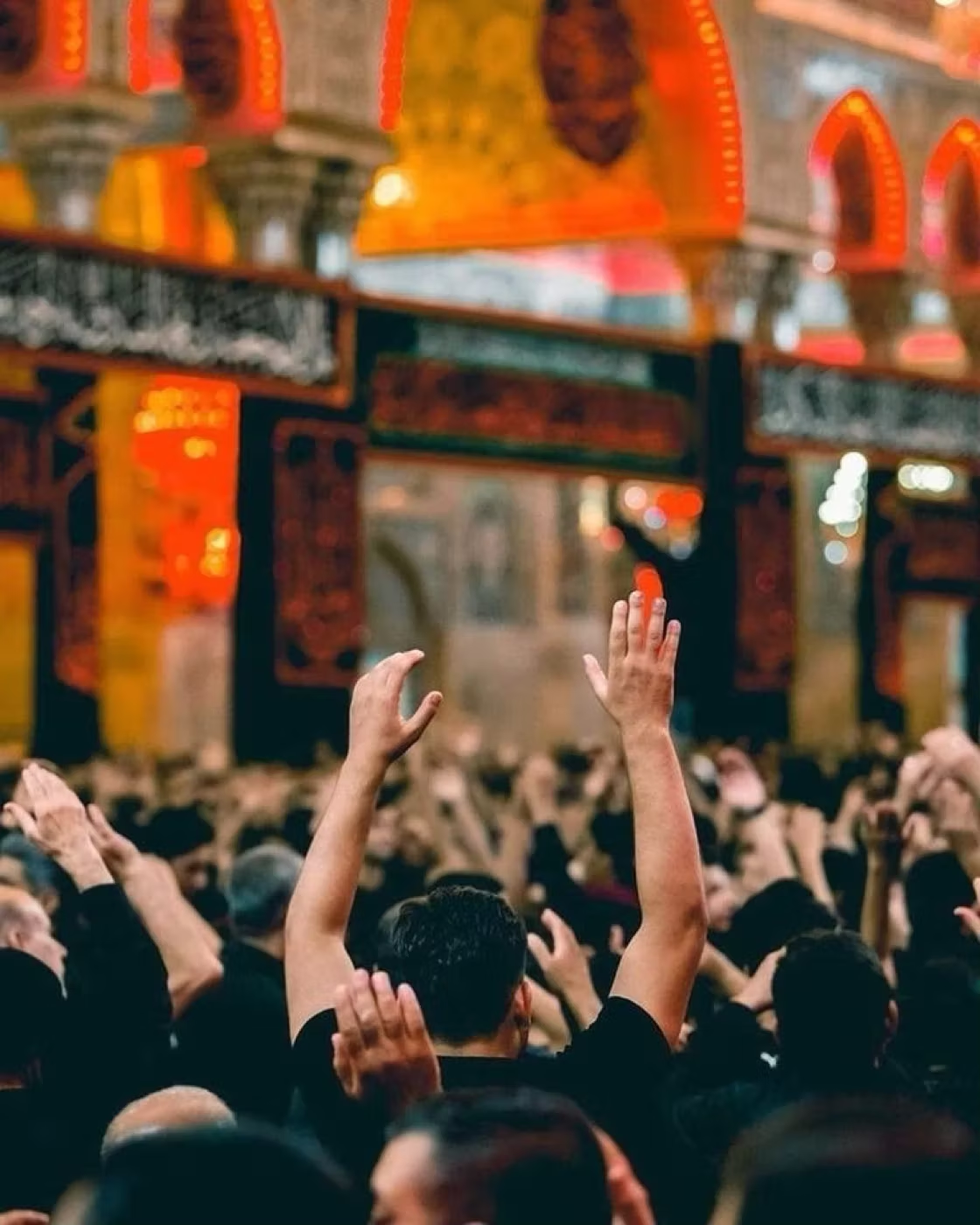
- Use the majlis as a school of accompaniment. The communal gatherings of Muḥarram are, among many other things, a training ground in being-with collective grief. Attend not only to mourn but to notice how the community holds sorrow together, and carry that posture into your relationships with the individually suffering.
- Regulate before you counsel. If you are supporting a person whose breath has shortened and whose body is overwhelmed (the lahfān lahthān of the narration), your first gift is your own steadiness. Slow your own breathing, soften your own voice, and let your regulated presence become available to their nervous system before any words of guidance.
For Clinicians
- Front-load presence in the highest-acuity moments. With clients in acute crisis, treat regulated presence and co-regulation as the primary intervention rather than a preamble (Fowler et al., 2025). The worksheet can wait; the steadiness cannot.
- Name the fixing reflex and resist it. Notice in yourself the impulse to offer premature reassurance or a hasty plan when faced with unfixable suffering, and recognize it as your own discomfort seeking relief. The discipline of the Karbalāʾ paradigm is to extinguish that lamp and remain.
- Assess for the client’s own ethic of accompaniment. With Shīʿah Muslim clients, explore how muwāsāt, the majālis, and communal mourning function in their lives. These are not peripheral spiritual habits; they shape the client’s expectations of what care should feel like and can be drawn upon as existing strengths.
- Hold presence and competence together. Presence is not a substitute for skill; it is the ground on which skill becomes usable. The recommendation is not to abandon technique but to sequence it correctly, establishing safety first so that the intervention, when it comes, lands in a regulated rather than a defended nervous system.
- Refer to the spiritual dimension when it exceeds your training. When a client’s suffering carries theological weight that lies beyond your competence, collaboration with a knowledgeable ʿālim or community leader is a clinical strength, not a failure. The best care often honors both the consulting room and the ḥusayniyyah.
Frequently Asked Questions
Is it really “doing something” to just be present with a suffering person?
Yes, and the clinical evidence is unambiguous on this point. The therapeutic alliance is among the most robust predictors of outcome across treatment models (Flückiger et al., 2018), and regulated presence is a measurable state that co-regulates a distressed person’s nervous system toward safety (Geller & Porges, 2014). Presence is not the absence of action; it is a specific and powerful action.
Does emphasizing presence mean that techniques and treatments do not matter?
No. The argument is one of sequence, not of substitution. Evidence-based techniques matter a great deal, but they become usable only once a person feels safe enough to engage them. Presence establishes that safety; technique builds on it. To skip the first is to deliver the second to a nervous system that cannot receive it.
How is muwāsāt different from sympathy or pity?
Sympathy and pity can be offered from a distance and from above. Muwāsāt, as the tradition frames it, means placing oneself alongside the afflicted and sharing in their burden as an equal and an obligation. It is closer to solidarity than to pity, and the night of ʿĀshūrāʾ is its defining image: not feeling sorry for someone, but refusing to leave them.
Can attachment to the tradition of Karbalāʾ actually help in modern psychological distress?
For many Shīʿah clients, the ethic and imagery of Karbalāʾ provide a living framework for meeting suffering with dignity and companionship. As this series will explore in later posts, the tradition offers resources for grief, attachment, and moral resilience that align with and, in some respects, exceed contemporary clinical frameworks. Faith and evidence-based care are not in competition here; they are corroborating witnesses.
When should presence give way to professional help?
Presence from family and community is essential, but it is not a substitute for clinical care when suffering becomes persistent, impairing, or dangerous. If distress is interfering with daily functioning, if hopelessness deepens, or if there are thoughts of self-harm, the right form of muwāsāt includes helping the person reach a qualified mental health professional. Accompaniment and treatment are partners, not alternatives.
Conclusion: To Stay Is Already to Help
The argument of this post can be stated simply. Contemporary psychotherapy has discovered, through decades of careful research, that presence heals: that the regulated, attuned companionship of another human being co-regulates a distressed nervous system, builds the alliance that carries treatment, and constitutes, in the highest-acuity moments, the intervention itself. The Shīʿah tradition named this centuries earlier and grounded it more deeply, calling it muwāsāt and framing it not as a technique but as a right the sufferer is owed, a worship the helper performs, and the native temperature of a healthy community. And in the companions who would not leave Imām Ḥusayn (ʿa) on the night of ʿĀshūrāʾ, freely staying in a suffering they could not fix, the tradition gave us the purest image of being-with that I know.
For the person sitting on the floor at two in the morning, this is not an abstraction. It is the difference between a world in which their pain must be solved before it can be honored and a world in which someone will simply sit down beside them. The science says this is effective. The tradition says it is owed. Both say: do not leave them alone.
In the next post of this series, I turn from presence to the grief that presence makes room for, examining how the Shīʿah practice of ʿazāʾ, communal and embodied mourning, honors a sorrow that contemporary clinical culture is increasingly inclined to pathologize. If muwāsāt is the act of staying with the grieving, ʿazāʾ is what the grieving are permitted to do once someone has stayed.
At Kisa Therapy Clinic, we believe that the best clinical work honors both the science of psychology and the wisdom of the tradition. If you or someone you love is carrying a suffering that no one has yet been willing to simply sit beside, we are here to hold that with you.
May Allah (swt) make us among those who do not abandon, who relieve the distress of the breathless, and who learn, from the companions of Imām Ḥusayn (ʿa), the dignity of staying. Wa mā tawfīqī illā billāh.
Ali Raza Hasan Ali, MSW, RSW
Clinical Director, Kisa Therapy Clinic
References
Flückiger, C., Del Re, A. C., Wampold, B. E., & Horvath, A. O. (2018). The alliance in adult psychotherapy: A meta-analytic synthesis. Psychotherapy, 55(4), 316–340. https://doi.org/10.1037/pst0000172
Fowler, J. C., Weir, S., & Orme, W. (2025). Core principles of treating the suicidal adult. Psychotherapy. Advance online publication. https://doi.org/10.1037/pst0000601
Geller, S. M., Greenberg, L. S., & Watson, J. C. (2010). Therapist and client perceptions of therapeutic presence: The development of a measure. Psychotherapy Research, 20(5), 599–610. https://doi.org/10.1080/10503307.2010.495957
Geller, S. M., & Porges, S. W. (2014). Therapeutic presence: Neurophysiological mechanisms mediating feeling safe in therapeutic relationships. Journal of Psychotherapy Integration, 24(3), 178–192. https://doi.org/10.1037/a0037511
Porges, S. W. (2025). Polyvagal theory: Current status, clinical applications, and future directions. Clinical Neuropsychiatry, 22(3). https://doi.org/10.36131/cnfioritieditore20250301
Shaykh al-Kulaynī (compiler). Al-Kāfī, Usul, Vol. 2, Kitāb al-Īmān wal-Kufr: Bāb fī ḥuqūq al-muʾmin (Ḥadīth 15), Bāb tafrīj karb al-muʾmin (Ḥadīth 1), Bāb at-tarāḥum wat-taʿāṭuf.
ʿAllāmah al-Majlisī (compiler). Biḥār al-Anwār, Vol. 44 (the night of ʿĀshūrāʾ; Ḥusayn’s release of his companions from allegiance).
Shaykh al-Mufīd (compiler). Kitāb al-Irshād, Vol. 2 (the events of the night before ʿĀshūrāʾ).