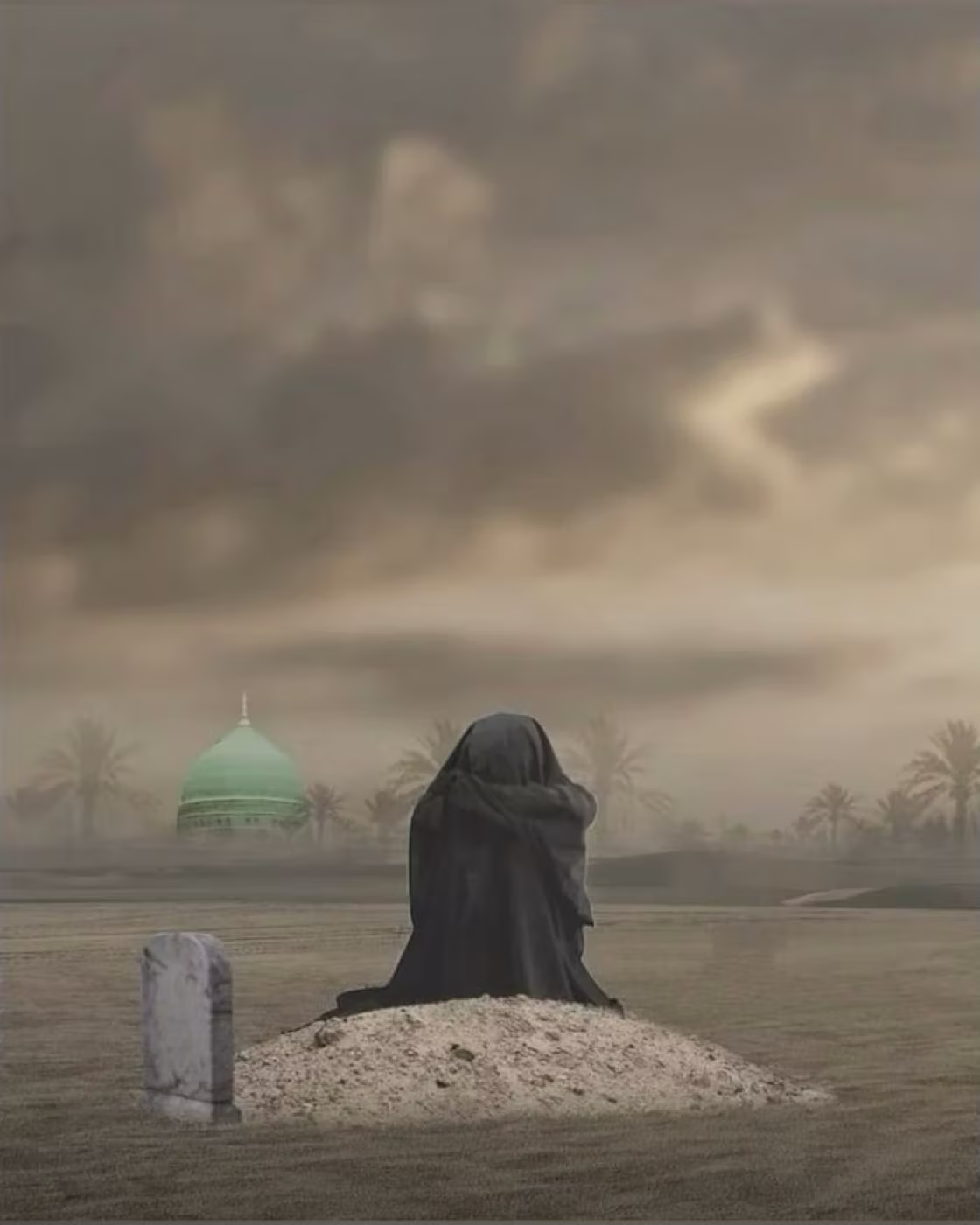

Part 3 of 3 | The Graves They Could Not Bury: Islamic Psychology of Sacred Grief on Yawmul Ghamm
Introduction: Can a Community Grow from a Wound That Remains Open?
In the first post of this series, I named the grief: disenfranchised, morally injurious, and ongoing. The grief of Baqīʿ is a grief that the social world refuses to acknowledge, that constitutes a wound to the moral universe, and that is continuously re-activated by the present reality of demolished graves and denied access. In the second post, I explored how the tradition provides for mourning from afar, transforming distance into a different form of spiritual intimacy. The framework of continuing bonds and the practice of ziyārah from afar revealed that physical proximity is not a prerequisite for spiritual connection; the Ahlul Bayt (ʿa) remain accessible to those who seek them, whether or not the ḍarīḥ stands.
This third and final post asks a question that may, at first, seem paradoxical: Can a community grow from a wound that remains open? Can there be post-traumatic growth when the trauma is not past but present?
At Kisa Therapy Clinic, we have observed something in our Shīʿah clients that the clinical literature is only beginning to name. Alongside the grief, alongside the moral injury, alongside the ongoing ache of Yawmul Ghamm, there exists something else: a deepening. A strengthening. A form of communal resilience that does not erase the suffering but somehow coexists with it. Clients describe feeling more connected to their community because of the shared grief, not in spite of it. They describe a sense of purpose that emerges from the obligation to remember. They describe spiritual growth that is inseparable from spiritual pain.
The central argument I make in this post is that the Shīʿah community’s response to the destruction of Jannatul Baqīʿ demonstrates all five domains of post-traumatic growth as defined by Tedeschi and Calhoun (2004), applied communally rather than individually. The tradition’s insistence on remembrance is not mere ritual repetition; it is the mechanism through which collective trauma is transmuted into collective meaning. This is not a triumphalist claim. Growth and grief coexist. The wound remains open, and the growth emerges not from its closure but from the community’s refusal to let the wound be forgotten.
How This Post Is Structured
This post moves through five modules. First, I introduce the framework of post-traumatic growth (PTG) and its core mechanisms. Second, I extend the framework from individual to collective application, drawing on scholarship on collective trauma and communal meaning-making. Third, I apply the five domains of PTG to the Shīʿah community’s century-long response to the destruction of Baqīʿ. Fourth, I examine the tradition’s own mechanism for sustaining growth through remembrance. Fifth, I offer clinical recommendations for practitioners working with clients whose grief is simultaneously personal, communal, and theological. A references section follows at the end.
Module 1: Post-Traumatic Growth — The Framework
“Positive Psychological Changes in the Aftermath of Struggle”
In 1996, Richard Tedeschi and Lawrence Calhoun introduced the Post-Traumatic Growth Inventory (PTGI), a tool designed to measure “positive psychological changes experienced as a result of the struggle with highly challenging life crises” (Tedeschi & Calhoun, 1996). In their landmark 2004 theoretical elaboration, they refined the construct and identified five distinct domains in which growth can occur following trauma:
- Improved relationships with others. Survivors report feeling closer to others, more willing to express emotion, and more compassionate toward those who suffer.
- New possibilities for the life path. The crisis opens doors that were previously invisible; new interests, new priorities, and new directions emerge from the wreckage of the old.
- Greater appreciation for life. What was once taken for granted becomes precious. Small things acquire weight. Gratitude deepens.
- Greater sense of personal strength. The paradoxical recognition that one is simultaneously more vulnerable than previously believed and far stronger than previously imagined. Tedeschi and Calhoun capture this with the formulation: “I am more vulnerable than I thought, but much stronger than I ever imagined.”
- New perspectives on spiritual and existential issues. The crisis triggers a re-examination of fundamental questions about meaning, purpose, and the nature of existence. For many, this results in a deepening of faith or a reorientation of spiritual priorities.
The core mechanism of PTG, as Tedeschi and Calhoun (2004) describe it, is the shattering of what they term “core beliefs” or the “assumptive world.” When a crisis is severe enough to disrupt one’s fundamental assumptions about how the world works (that it is safe, predictable, just), the resulting cognitive upheaval triggers both anxiety and intensive cognitive processing. Early in the process, this processing takes the form of intrusive rumination: unbidden, repetitive thoughts about the crisis. Over time, however, intrusive rumination may be harnessed into a more deliberate reflection on core beliefs. It is this deliberate, effortful reflection that produces growth.
A critical qualification is necessary here, one that I cannot emphasize enough: PTG does not replace suffering. It operates, as Tedeschi and Calhoun are careful to note, as a parallel process alongside negative outcomes rather than replacing them. Growth and distress coexist. A person (or a community) can simultaneously experience profound suffering and genuine growth. This is not toxic positivity. It is not the claim that suffering is “worth it” or that trauma is a gift. It is the more modest observation that, in the process of struggling with a crisis, some people and some communities undergo genuine positive transformation, even as the pain persists.
The question that the Baqīʿ grief poses to this framework is straightforward: Can PTG apply to communities, not just individuals? Can the five domains be observed at a collective scale?
Module 2: Collective PTG — From Individual to Community
“When a Community’s Assumptive World Is Shattered”
Tedeschi and Calhoun developed PTG as an individual framework. But what happens when the trauma is collective, the loss is communal, and the growth emerges not in a single psyche but in a shared identity?
Gilad Hirschberger (2018) provides a foundational bridge. In his analysis of collective trauma and the construction of collective memory, Hirschberger writes that collective trauma is a cataclysmic event that shatters the basic fabric of society, and that aside from the horrific loss of life, collective trauma is also a crisis of meaning. This formulation maps directly onto the mechanism that Tedeschi and Calhoun describe at the individual level: trauma shatters the assumptive world, producing a crisis that demands cognitive and emotional processing. At the collective level, this crisis of meaning triggers what Hirschberger describes as a process of collective memory construction, where the community transforms raw traumatic experience into a system of meaning that can redefine who they are and where they are going.
Hirschberger adds a dimension directly relevant to the intergenerational nature of Baqīʿ grief: for victims, the memory of trauma may be adaptive for group survival but also heightens existential threat, prompting a search for meaning and the construction of a transgenerational collective self. The memory of trauma is not merely a record of the past; it is a living force that shapes present identity and future orientation. The community’s remembrance of the event is simultaneously a remembrance of the suffering and a reconstruction of communal identity in light of that suffering.
Empirical support for collective PTG has emerged with increasing clarity. Black and Kunst (2026), in a study of 931 participants, demonstrated that collective trauma yields both individual and community-level post-traumatic growth. Their findings are particularly relevant to the Baqīʿ context: higher levels of religious identification, involvement, and coping predicted the highest levels of PTG. Communities that were more religiously engaged and drew more explicitly on faith-based frameworks to process their trauma showed greater growth. This is not a marginal finding. It suggests that the very practices the Shīʿah community employs to process the grief of Baqīʿ (communal remembrance, theological framing, ritual mourning) are precisely the practices that facilitate collective PTG.
Matos and colleagues (2021), studying Syrian refugees’ meaning-making processes in the aftermath of the Syrian civil war, offer further corroboration. They found that the war severely disrupted Syrians’ sense of collective self, and they repeatedly engaged in search for meaning. Yet alongside this disruption, they documented progressive restoration of worldviews, new opportunities for self-realization, and newly-found purpose. The parallel to the Baqīʿ experience is notable: a collective trauma that shatters the community’s sense of how the world should be, followed by a long, effortful process of meaning reconstruction that produces genuine growth alongside ongoing suffering.
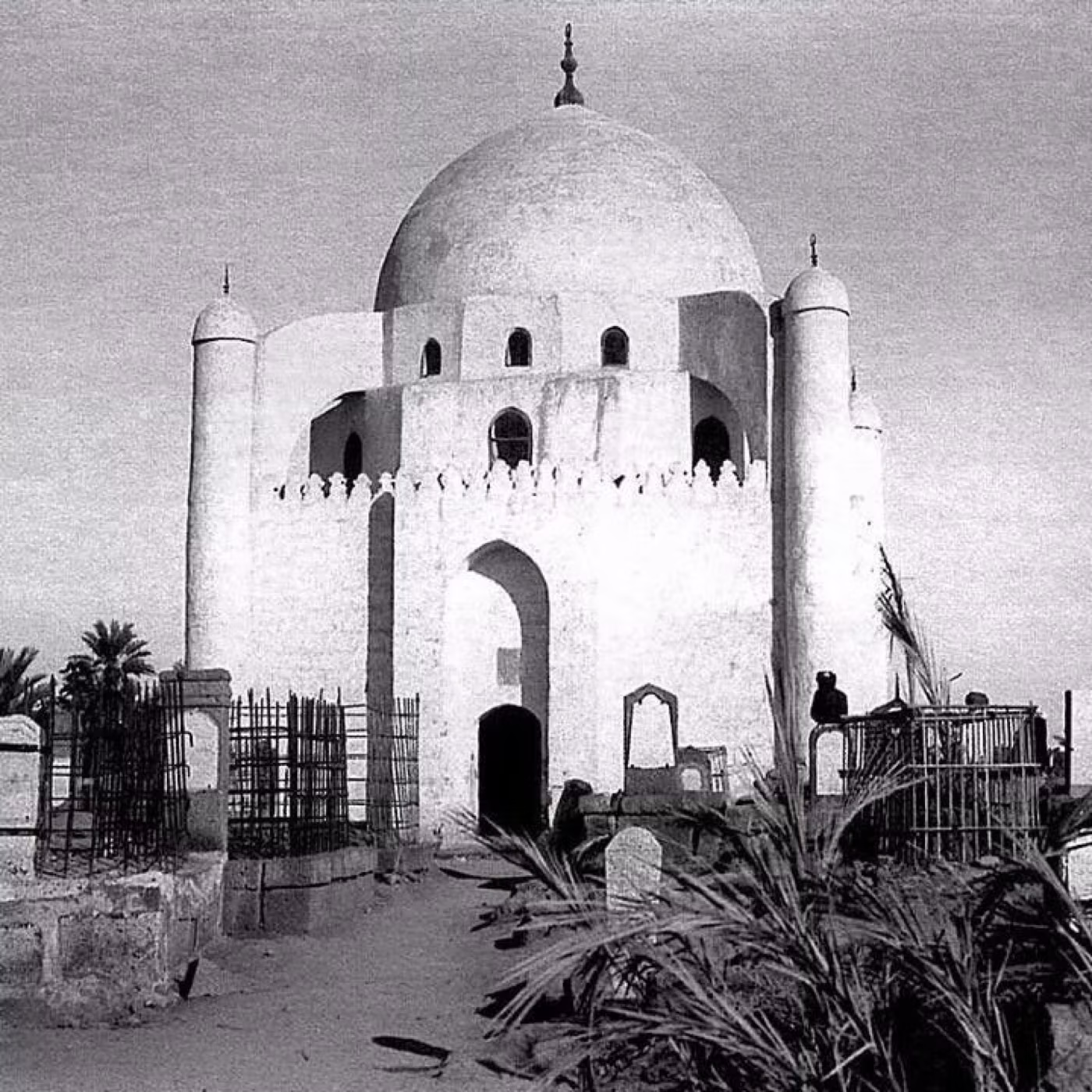
I posit that the destruction of Jannatul Baqīʿ shattered the Shīʿah community’s “assumptive world” in a manner that maps precisely onto these frameworks. The assumption that sacred sites would be protected, that the graves of the Maʿṣūmīn (ʿa) would endure, that the physical markers of devotion were permanent: all of these were demolished along with the domes and walls. A century later, the community has constructed a meaning system that incorporates the destruction into a narrative of sacred perseverance. The grief has not been resolved. The graves remain flat. But the community has grown through the struggle with this grief in ways that are clinically recognizable and, I argue, theologically significant.
Module 3: The Five Domains Applied to Baqīʿ
“A Century of Growth Through Sacred Grief”
The tradition of the Ahlul Bayt (ʿa) teaches that affliction and growth are not opposites but companions on the path of walāyah. Allah (swt) tests those closest to Him most intensely, and the community’s response to that test shapes its character across generations. It is with this theological grounding that I now apply Tedeschi and Calhoun’s five domains of PTG to the Shīʿah community’s collective response to the destruction of Baqīʿ. In each case, I pair clinical observation with textual evidence from the tradition of the Ahlul Bayt (ʿa), maintaining the epistemological register that has guided this series: science provides mechanistic language; theology provides foundational authority.
Domain 1: Improved Relationships
The annual observance of Yawmul Ghamm creates communal solidarity that transcends geographical, linguistic, and cultural boundaries. From Karachi to Karbalāʾ, Tehran to Toronto, Shīʿah communities gather on 8 Shawwāl to share in a grief that is simultaneously personal and collective. The shared wound binds. A Shīʿah Muslim in London and a Shīʿah Muslim in Qom may share little in terms of language, culture, or daily experience, but they share this: the knowledge that four Imāms (ʿa) lie beneath unmarked ground, and the grief that this knowledge produces.
The tradition itself sanctions this communal solidarity in grief. The Noble Prophet Muḥammad (ṣ) is reported to have said: *”Whoever condoles with a grief-stricken person receives the same reward as him.”*¹ The act of sharing in another’s grief is not merely a social nicety; it is a spiritual act that carries its own reward. The communal condolence formula attributed to Imām al-Bāqir (ʿa), recited on occasions of shared mourning (“May Allah make our reward great for our bereavement…”), further reinforces that grief is meant to be held communally. The community’s relationships have been strengthened, not weakened, by a century of shared sorrow.
Domain 2: New Possibilities
The destruction of Baqīʿ did not merely produce grief. It generated action. In the decades since the demolition, the Shīʿah community has created advocacy movements, scholarly initiatives, and heritage preservation projects that would not have existed without the catalyst of the destruction. The Al Baqee Organization has worked for decades to raise awareness of the destruction and advocate for the reconstruction of the graves. The Baqi Project, led by architect Zuhair Hussaini, has produced detailed architectural designs for the restoration of the cemetery, transforming grief into a concrete vision of what rebuilding could look like.
International conferences, petitions to the United Nations, scholarly publications, and interfaith dialogue initiatives have all emerged from this single wound. The destruction became a catalyst for organizing, education, and engagement with the wider world. New possibilities, in Tedeschi and Calhoun’s sense, have opened precisely because the old reality was demolished.
Domain 3: Greater Appreciation
The loss of Baqīʿ deepened the Shīʿah community’s appreciation for what remains. The sacred sites of Karbalāʾ, Najaf, Mashhad, and Sāmarrāʾ, while always revered, acquired a heightened preciousness in light of what was taken. The destruction made visible what had been taken for granted: the fragility of sacred architecture, the vulnerability of heritage sites to political power, and the incalculable value of what still stands.
Imām ʿAlī (ʿa) taught: *”Increase your remembrance of death … and your afflictions will become easier to bear.”*² The remembrance of what was lost, I suggest, functions analogously: by confronting the reality of Baqīʿ’s destruction, the community becomes more attuned to the preciousness of what endures. Gratitude and grief are not opposites; they are, in this case, companions.
Domain 4: Greater Sense of Personal Strength
Tedeschi and Calhoun’s paradoxical formulation (“I am more vulnerable than I thought, but much stronger than I ever imagined”) captures something essential about the Shīʿah experience. A century of perseverance in mourning, despite suppression, ridicule, and political marginalization, has demonstrated a communal strength that the community itself may not have known it possessed. The mourning practices have survived a hundred years of being told they are unnecessary, excessive, or deviant. They persist.
The tradition, remarkably, prepared the community for precisely this kind of perseverance. Imām ʿAlī (ʿa) taught: *”One who loves us should prepare to be covered with afflictions.”*³ And again: *”One who befriends us should have a thick skin for tribulations.”*⁴ These are not abstract theological statements. They are, I argue, prophetic descriptions of the psychological covenant of walāyah (guardianship, devotion). The one who walks this path was told, in advance, that it would be difficult. Resilience is not an accidental byproduct of the grief; it is built into the very terms of the relationship.
Domain 5: Spiritual Deepening
The destruction of Baqīʿ catalyzed a deeper theological reflection on impermanence, sacred memory, and the meaning of ziyārah (Visitation). As I explored in the second post of this series, the impossibility of physical visitation in the traditional sense (standing before a ḍarīḥ, touching the walls of a structure, performing the embodied ritual of presence) produced a more interior, contemplative relationship with the Ahlul Bayt (ʿa). The concept of ziyārah from afar, while always present in the tradition, acquired a new urgency and centrality in the aftermath of the demolition.
The very impossibility of visiting the graves as they were meant to be visited pushed the community inward, toward a form of devotion that is less dependent on physical structure and more grounded in spiritual connection. This is not to say that the physical destruction was acceptable or that interior devotion is a substitute for the restoration of the graves. It is to say that the community’s spiritual life deepened in response to the crisis, and this deepening is clinically recognizable as PTG.
Imām ar-Riḍā (ʿa) taught: *”He for whom the day of ʿĀshūrāʾ is a day of grief, sorrow, and crying, Allah will make the Day of Resurrection a day of joy and happiness for him.”*⁵ While this narration refers specifically to ʿĀshūrāʾ, I posit that the principle it articulates applies to the broader ecology of sacred grief: the willingness to inhabit sorrow in this world is linked, in the tradition’s own terms, to a transformation that transcends it.
The following table summarizes the application of the five PTG domains:
|
PTG Domain |
Individual Expression |
Communal Expression (Baqīʿ) |
|
Improved relationships |
Closer personal bonds after loss |
Global Shīʿah solidarity through shared grief |
|
New possibilities |
New life directions |
Advocacy, heritage preservation, scholarly work |
|
Greater appreciation |
Gratitude for what remains |
Deepened reverence for extant sacred sites |
|
Personal strength |
“Stronger than I imagined” |
A century of perseverance; resilience as walāyah |
|
Spiritual deepening |
New existential perspective |
Interior ziyārah; contemplative relationship with Ahlul Bayt (ʿa) |
Module 4: The Community of Remembrance
“Keep Our Issue Alive”
Post-traumatic growth does not happen automatically. It requires a structure within which the shattered assumptive world can be rebuilt. For the Shīʿah community, that structure is dhikr (ذِكْر, remembrance).
The tradition of the Ahlul Bayt (ʿa) contains explicit directives to gather, to speak, and to keep the memory of the Imāms (ʿa) alive. Imām aṣ-Ṣādiq (ʿa) said: *”Do you sit together, talk and discuss amongst yourselves? I approve of these sittings. So keep our ‘issue’ (Imamate) alive. May Allah exhibit mercy on those who revive our issue and mission!”*⁶ And Imām ar-Riḍā (ʿa) taught: *”He who sits in a gathering in which our affairs are discussed and revived, his heart shall not die on the day when hearts shall die.”*⁷
These narrations are not incidental. They constitute, I argue, a communal prescription for meaning-making in the aftermath of loss. The Imāms (ʿa) instructed their followers to gather, to discuss, to keep the narrative alive. The majālis (communal gatherings of mourning and remembrance), which are the primary vehicle for this remembrance, serve a function that is simultaneously theological and psychological. They are the spaces where the communal narrative is retold, the grief is shared, and the meaning is collectively reconstructed.
Robert Neimeyer (2001) identified three core processes in meaning reconstruction after loss: sense-making (understanding why the loss occurred and what it means), benefit finding (identifying positive outcomes that have emerged from the loss), and identity change (reconstructing a sense of self or community in light of the loss). Based on my limited exploration, I suggest that the annual Yawmul Ghamm cycle embodies all three of these processes. The community makes sense of the destruction through theological framing: this is a test, an injustice that will be addressed, a continuation of the pattern of persecution that the Ahlul Bayt (ʿa) have endured since the earliest days of Islam. The community finds benefit in the form of communal solidarity, spiritual deepening, and the advocacy that the destruction has catalyzed. And the community reconstructs its identity: not as passive victims of historical injustice but as custodians of sacred memory, bearing witness until the injustice is rectified.
The community of remembrance is itself the rebuilding. This, I posit, is the deepest insight that the Baqīʿ grief offers to clinical scholarship. The physical graves may not be rebuilt in the foreseeable future. The domes may not be restored. But the communal memory is rebuilt every year, every majlis, every ziyārah from afar. The structure that was demolished was made of brick and mortar. The structure that has been built in its place is made of narrative, devotion, and collective will. It is, in its own way, more durable.
Pihkala (2025), writing on ecological grief and the Dual Process Model of coping, notes that meaning-making oscillates between confronting loss and attending to restoration. The Shīʿah community’s annual cycle of commemoration embodies this oscillation: the community confronts the destruction (the grief, the mourning, the lament) and simultaneously engages in restoration (the retelling, the teaching, the advocacy). This is not avoidance. It is integration: the community holds both the wound and the growth, neither denying the pain nor being consumed by it.

Module 5: Clinical Framework for Communal Grief Processing
“For Clinicians: Holding Space for Collective Sacred Grief”
How does a clinician hold space for a grief that is simultaneously personal, communal, and theological? This question has guided much of my clinical work at Kisa Therapy Clinic, and I offer here a set of considerations rather than a prescriptive protocol, acknowledging that this field remains in its early stages.
The first and most fundamental principle is that the clinician’s role is not to resolve the grief but to validate it, understand its layers, and support the client’s own meaning-making. The grief of Baqīʿ is not a problem to be solved. It is not a disorder to be treated. It is a legitimate, multidimensional response to a real and ongoing injustice. The clinician who approaches this grief with the implicit goal of helping the client “move past it” has misunderstood the nature of the wound.
The second principle is that the client’s community is itself a therapeutic container. The majālis, the ziyārah, the annual commemorative cycle: these are, in functional terms, group grief therapy that predates Western clinical models by centuries. They provide a structured space for emotional expression, narrative retelling, communal validation, and meaning reconstruction. The clinician who is unaware of these practices may inadvertently pathologize a client’s engagement with them, or may fail to recognize that the client already has access to a powerful, culturally embedded system of grief processing.
This recognition leads to practical guidance regarding when to encourage communal engagement and when individual therapy is indicated. I suggest that communal engagement should be encouraged when the client is isolating from the community, when individual processing has reached its limits and the client needs to reconnect with shared meaning, or when the client expresses a desire for belonging and validation that individual therapy alone cannot provide. Individual therapy, conversely, may be indicated when communal grief triggers unprocessed individual trauma (for instance, when the grief of Baqīʿ resonates with personal experiences of loss, displacement, or oppression), when the client’s grief has become disconnected from the communal narrative and has turned inward in ways that produce despair rather than solidarity, or when existential anguish overrides the hope that the tradition offers.
I offer the following practical recommendations for therapists working with Shīʿah clients around sacred grief:
- Learn the basic contours of Shīʿah mourning tradition. One need not be a scholar of Islamic studies. But understanding the significance of Yawmul Ghamm, the role of majālis, and the meaning of ziyārah allows the clinician to meet the client where they are, rather than interpreting unfamiliar practices through a lens of pathology.
- Ask about the client’s relationship to Yawmul Ghamm and other commemorative occasions. This single question can open a therapeutic conversation of considerable depth. Does the client attend majālis? Do they find solace there? Do they feel disconnected from the community’s mourning? Each answer reveals something about the client’s relationship to communal meaning.
- Understand that “not moving on” may be the healthiest response. In a clinical culture that often equates progress with detachment from grief, the Shīʿah client who refuses to “let go” of Baqīʿ may be exercising precisely the form of sacred perseverance that the tradition prescribes and that the PTG literature recognizes as growth.
- Support the client’s engagement with communal mourning practices as adjunctive to therapy. The majālis and the annual cycle of commemoration are not obstacles to clinical progress. They are, properly understood, allies of the therapeutic process: spaces where the client can access communal validation, narrative meaning, and spiritual connection.
- Consult with community scholars when theological questions arise. The clinician is not a theologian. When a client’s distress involves questions about divine justice, the meaning of suffering, or the theological significance of the destruction, the appropriate response is not to provide answers but to support the client’s engagement with scholars and texts that can address these questions within the tradition’s own framework.
Conclusion: The Graves They Could Not Bury
A Series Synthesis
This series began with a title: The Graves They Could Not Bury. I chose this title because it captures, in a single phrase, the paradox at the heart of the Baqīʿ grief. They demolished the physical structures. They razed the domes and walls. They reduced the cemetery to an unmarked field. But they could not bury the grief, the memory, or the bond.
The three posts in this series trace an arc. In the first, I named the grief: disenfranchised by the social world, morally injurious in its nature, and continuously re-activated by the present reality of the demolished graves. In the second, I explored how the tradition provides for mourning even when the mourner is distant: through continuing bonds that are not dependent on physical proximity, and through the practice of ziyārah from afar, which transforms geographical distance into a different form of spiritual intimacy. In this third post, I have argued that the community has grown through this grief, not by resolving it but by inhabiting it with purpose, solidarity, and deepening faith.
The tradition’s wisdom, I suggest, is this: grief is not a problem to be solved but a sacred obligation to be inhabited. The clinical literature on post-traumatic growth confirms, in its own idiom, what the Ahlul Bayt (ʿa) taught centuries ago: that suffering, when it is held with deliberation, shared in community, and oriented toward meaning, can become a vehicle for transformation. Not a replacement for suffering, but a companion to it.
Imām ʿAlī (ʿa) described the believer in terms that I find difficult to improve upon: *”The cheerfulness of a believer is in his face, and his sorrow is in his heart … His grief is long, his sorrow is distant, his silence is much, and his time is occupied …”*⁸ The muʾmin is defined not by the absence of grief but by the capacity to carry it with dignity, purpose, and hope. The grief of Baqīʿ is one hundred years old this year. It has not diminished. And the community that carries it has not broken.
At Kisa Therapy Clinic, we are committed to grief work that honors the full complexity of our clients’ spiritual lives. The grief of Baqīʿ is one hundred years old this year, and it is as fresh as the day the domes fell. It is our privilege to hold space for it.
Ali Raza Hasan Ali, MSW, RSW, Clinical Director, Kisa Therapy Clinic
References
Black, R., & Kunst, J. R. (2026). Individual and community-level posttraumatic growth following collective trauma: The role of religious identification, involvement, and coping. British Journal of Psychology.
Hirschberger, G. (2018). Collective trauma and the social construction of meaning. Frontiers in Psychology, 9, 1441.
Matos, L., Indart, M. J., Park, C. L., & Leal, I. (2021). Meaning-making and psychological adjustment following refugee trauma. International Journal of Environmental Research and Public Health, 18(16), 8481.
Neimeyer, R. A. (2001). Meaning reconstruction and the experience of loss. American Psychological Association.
Pihkala, P. (2025). Ecological grief and the Dual Process Model of coping. Religions.
Tedeschi, R. G., & Calhoun, L. G. (1996). The Posttraumatic Growth Inventory: Measuring the positive legacy of trauma. Journal of Traumatic Stress, 9(3), 455–471.
Tedeschi, R. G., & Calhoun, L. G. (2004). Posttraumatic growth: Conceptual foundations and empirical evidence. Psychological Inquiry, 15(1), 1–18.
Primary Sources
¹ ʿAllāmah al-Majlisī (compiler). Biḥār al-Anwār, vol. 82, p. 94.
² Shaykh aṣ-Ṣadūq (compiler). Al-Khiṣāl, p. 616.
³ ʿAbd al-Wāḥid al-Āmidī (compiler). Ghurar al-Ḥikam, Ḥadīth #1566.
⁴ ʿAbd al-Wāḥid al-Āmidī (compiler). Ghurar al-Ḥikam, Ḥadīth #1567.
⁵ Shaykh aṣ-Ṣadūq (compiler). ʿIlal ash-Sharāʾiʿ, p. 227.
⁶ al-Ḥurr al-ʿĀmilī (compiler). Wasāʾil ash-Shīʿah, vol. 10, p. 391.
⁷ ʿAllāmah al-Majlisī (compiler). Biḥār al-Anwār, vol. 4, p. 178.
⁸ ʿAbd al-Wāḥid al-Āmidī (compiler). Ghurar al-Ḥikam, Ḥadīth #911.